Broaching Tools Come of Age
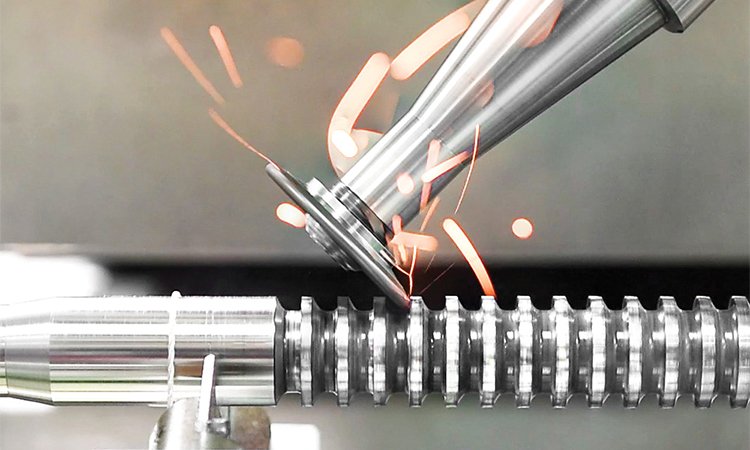
Broaching is one of the most precise and productive machining processes, designed to create complex internal and external profiles in a single stroke. While the process itself is not new, broaching tools and machines have undergone a significant transformation in recent years.
Advances in materials, coatings, design, and automation have brought broaching into the age of high-efficiency, high-precision, and cost-effective manufacturing. Today, industries such as automotive, aerospace, defense, and medical engineering rely heavily on modern broaching solutions to achieve repeatable accuracy and unmatched productivity.
The Essence of Broaching
At its core, broaching is a process of progressive material removal. A broach tool consists of a series of cutting teeth arranged in ascending order of size. As the tool passes over or through the workpiece, each successive tooth removes a small amount of material, leaving behind a precisely finished surface.
Broaching is particularly valuable when it comes to:
• Producing keyways and splines.
• Finishing internal gears and serrations.
• Shaping turbine discs, gun barrels, and orthopedic implants.
• High-volume applications where speed and uniformity matter.
Types of Broaching
Broaching processes are broadly classified into internal and external broaching, with variations depending on geometry and application.
• Internal Broaching: Used for machining keyways, splines, and irregular shapes inside holes.
• External Broaching: Used for surfaces such as slots, flats, or specialized profiles.
• Rotary Broaching: A modern variation that produces polygonal forms (e.g., hex, Torx) using live tools in CNC machines.
• Surface Broaching: Applied to flat or contoured external surfaces.
Materials and Coatings: The Game-Changers
The evolution of broaching tools has been driven largely by materials and coatings. Traditional high-speed steel (HSS) is still widely used, but carbide and cermet broaches are gaining ground for their superior wear resistance.
• High-Speed Steel (HSS): Versatile, cost-effective, and easy to re-sharpen, but less durable for hard materials.
• Carbide Broaches: Offer longer tool life and higher cutting speeds; ideal for hard steels and alloys.
• Coatings: TiN, TiAlN, and diamond-like coatings (DLC) significantly reduce friction, improve heat resistance, and extend service life.
Advancements in Broaching Tool Design
Modern broaching tools are no longer just rows of teeth. Precision engineering has enabled:
• Optimized Tooth Geometry: Reduces cutting forces and improves chip evacuation.
• Modular Tooling Systems: Allow for tool segments to be replaced or reconfigured for different profiles, reducing downtime.
• 3D-Printed Tool Holders: Lightweight yet strong, offering better damping of vibrations.
• Micro-Broaching Tools: Designed for delicate applications in medical devices and micro-mechanics.
CNC and Automation in Broaching
Broaching has traditionally been a dedicated process, but modern CNC integration has transformed its adaptability. CNC broaching machines can:
• Handle multiple operations in sequence.
• Automatically adjust for wear compensation.
• Interface seamlessly with robotic handling systems.
Example: In the automotive sector, robotic loading and unloading of shafts for keyway broaching has reduced cycle time while improving worker safety.
Broaching in High-Performance Industries
Automotive
Keyways, splines, and transmission components are mass-produced using broaching due to its unmatched cycle times.
Aerospace
Broaching is used to produce fir-tree slots in turbine discs, a critical application requiring tight tolerances and fatigue resistance.
Defense
Barrel rifling and firearm components depend on precision broaching for strength and repeatability.
Medical
Micro-broaches shape orthopedic implants, surgical instruments, and bone screws, where precision is paramount.
Advantages of Modern Broaching
• Speed: A single stroke can achieve in seconds what might take minutes on other machines.
• Accuracy: Tolerances of ±0.01 mm are routine.
• Surface Finish: Achieves Ra values as low as 0.2 µm.
• Consistency: Ideal for high-volume, repeatable production.
• Complexity: Can create profiles that are difficult with milling or turning.
Limitations and Challenges
Despite its strengths, broaching does have limitations:
• High Initial Tooling Cost: Broach tools are expensive to manufacture & maintain.
• Design Specificity: A tool is often dedicated to a single part geometry.
• Machine Footprint: Vertical and horizontal broaching machines can be large and costly.
• Chip Management: High material removal rates demand efficient chip evacuation.
Future of Broaching
The broaching industry is entering a new phase with the adoption of smart manufacturing practices. Digital twins for broach tools, predictive maintenance of machines, and sensor-based monitoring of tool wear are on the horizon.
Moreover, hybrid processes combining broaching with superfinishing or honing are being explored for even tighter tolerances and reduced secondary operations.Sustainability is also influencing the future of broaching. Coolant-free or minimum quantity lubrication (MQL) systems are reducing environmental impact while lowering operating costs.
Conclusion
Broaching tools have come of age by combining age-old reliability with modern innovation. Advances in tool materials, coatings, design, and automation have turned broaching into a future-ready machining process.
While high tooling costs and part-specific designs remain challenges, its advantages in precision, speed, and repeatability ensure that broaching remains indispensable in critical sectors. As industries demand tighter tolerances, faster cycles, and sustainable operations, broaching is not just keeping pace—it is setting new benchmarks.